 Explore Nature by Topic
Birds, Butterflies, and Insects
From spring songbirds to migrating butterflies and short-lived insects, this section introduces some of the region’s most fascinating flyers. These questions work well for families who enjoy birding, nature walks, and spotting seasonal wildlife.
How far can a monarch butterfly travel during migration?
A. 300 miles
B. 1,000 miles
C. 3,000 miles
D. 5,000 miles
What plant do monarch caterpillars need to eat?
A. Milkweed
B. Cattails
C. Oak leaves
D. Pine needles
Do you know about the Warblers?
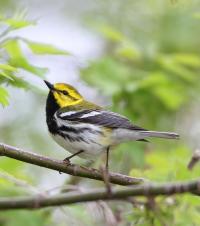
The New World Warblers or Wood-Warblers are renowned for their bright tropical colors, intricate songs, and lengthy migration paths. Considered neotropical migrants, "our" warblers breed throughout various habitats in the US and Canada, and winter from the southern U.S. to the tropics of central South America.
The migration arrival of the warbler to the Lake Erie shores is predictable within a few days period, as day-length is their driving factor. Weather systems also play a role in hastening or delaying their flights and therefore their arrival. For example, intensely warm fronts in the early spring can bring species that normally nest further south of the lake, as they can overshoot their intended destinations while caught up in warm southerly winds.
While warblers can be found nearly anywhere during migration, they tend to accumulate near the shores of Lake Erie, and move to lower areas within the vegetation where they are more easily viewable. During the month of May, you can reasonably expect to see over 30 warbler species (including vireos) at Magee Marsh.
Why do many birders get excited about warblers in spring?
A. They can only be seen at night
B. Many colorful species pass through during migration
C. They live only on frozen lakes
D. They build nests underground
What is Ohio's State Bird?
Which is correct about the Ohio state bird?
A. Flies south for the winter
B. Grows 8" long
C. State bird for 7 states
D. All of the above
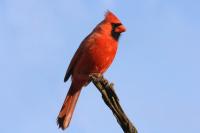
The cardinal (Cardinalis cardinalis) is the state bird of Ohio. It is well known for its rich, distinctive call. The cardinal's song is usually a repetition of short whistled phrases with some notes run together; for instance: What-cheer-cheer-cheer, or Who-it, who-it, who-it, or Birdy, birdy, birdy. There is also a sharp clink sound the bird makes as a call note. Cardinals can usually be found singing near the top of the tallest tree in their territory.
Cardinals prefer a mixed habitat of woodlands, brush, and forest edges. They eat a variety of seeds that their thick, cone-shaped beak is well adapted to handling, as well as some insects. Cardinals do not migrate, but individuals may wander over a widespread area. As with most wildlife species, cardinals have a very short life span. Most cardinals live only one year or less; a two- or three-year-old bird is rare. The multiple broods of young in a year help offset the loss of older birds in the population.
Bald eagles can build nests that weigh up to how much?
A. 200 lbs.
B. 500 lbs.
C. 1,000 lbs.
D. 2,000 lbs.
How long does an adult mayfly usually live?
A. 24-72 hrs.
B. One week
C. One month
D. One year
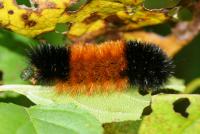
What's a Woolly Bear?
Belonging to the species Pyrrharctia Isabella, in late-summer they hatch from eggs and spend the fall as the woolly bear caterpillar. While they can withstand freezing temperatures, it’s important to leave some leaf debris in your yard as it provides a cozy winter blanket! As spring arrives, they pupate and emerge as the Isabella tiger moth.
The Woollybear Festival held in Vermilion is the largest one-day festival in Ohio. In 2025, the festival will be celebrating its 53rd year! Especially fun to see is the Woollybear 500 caterpillar race!
Can Woolly Bears predict the weather?
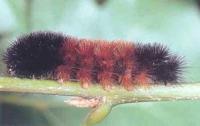
Many people believe that each colored segment represents one week of winter, therefore, fewer orange segments may indicate milder weeks, while more black ones foreshadow added weeks of severe winter weather, however, many factors influence seasonal weather patterns.
What is Ohio's state insect?
A. Beetle
B. Bumblebee
C. Firefly
D. Ladybug
Fish, Water, and Wetlands
Lake Erie, streams, marshes, and shorelines support a wide variety of fish and wildlife. This section focuses on aquatic life and the habitats that help keep the region healthy and full of outdoor adventure.
Trout prefer water that is:
A. Warm and muddy
B. Cool and clear
C. Hot and shallow
D. Salty and deep
Trout prefer water between which temperatures?
A. 35-40 degrees
B. 45-50 degrees
C. 55-60 degrees
D. 70-75 degrees
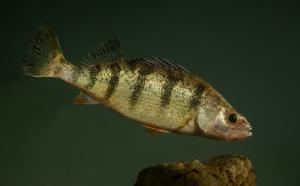
Have you heard about the Yellow Perch?
How many species of fish are in Lake Erie?
A. 80
B. 114
C. 122
D. 136
Catch me if you can! I am more abundant in the West Zone of Lake Erie between Toledo and Huron. Here, adult populations have been strong, while our population is declining in other parts of the lake. I tend to stay on the bottom of the lake eating mostly invertebrates. However, when waters warm above 76°F, I am forced to look for other food. The best catches come between mid-July and mid-August.
The Ohio Division of Wildlife manage our population and set sport fishing limits annually to keep our population thriving. Sport fishing daily limits may vary, check with Ohio Division of Wildlife regulations for the most up-to-date information.
In 2022 there were 945 Ohio-licensed charter captains, the most in more than 20 years. I bet they can help you find me!
Yellow perch often travel in groups called:
A. Packs
B. Colonies
C. Schools
D. Pods
Have you heard about the Lake Erie Watersnake?
How do snakes hear?
A. Through their tail
B. Through vibrations
C. Through their skin
D. They can't hear
Lake Erie Watersnake is a subspecies of the common watersnake, and is nonvenomous.
Lake Erie Watersnakes spend time on both land and in the lake. The snakes will seek shelter on land while sunning themselves on the rocky, limestone, and dolomite ledges of the shorelines. While in the water, the snakes will feed on round goby which accounts for 90% of the Lake Erie Watersnake's diet.
Tourists and islanders began intentionally killing them in the 1950s, incorrectly thinking they were venomous. Increased development also contributed to their decline.
To recover the population, the United States protected 300 acres of inland habitat and 11 miles of shoreline as breeding grounds. By 2009, the population had recovered to nearly 12,000. The introduction of the round goby to Lake Erie also contributed to its recovery.
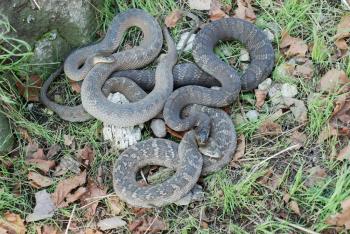
Which statement about the Lake Erie watersnake is true?
A. It is venomous
B. It lives only in deserts
C. It is a non-venomous snake connected to the Lake Erie shoreline and islands
D. It spends its whole life in trees

Wildflowers and Native Plants
Some of the region’s most memorable natural features bloom close to the ground, float on quiet water, or rise above wetland edges. This section helps families learn more about local flowers and native plants.
Which aquatic plant usually rises above the water surface?
A. Water lotus
B. Waterlily
C. Moss
D. Algae
Water Lotus has blooms of what color?
A. Blue
B. Pink
C. Yellow
D. Purple
What's special about the Lakeside Daisy?
A. It blooms only in tropical climates
B. It is a rare wildflower associated with the Marblehead area
C. It grows only underwater
D. It is Ohio’s state tree
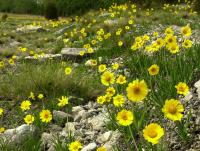
The Lakeside daisy is small but sturdy, growing only on alvars (rocky limestone or dolomite with little to no soil). Like many species of flowers, the Lakeside daisy’s bright yellow color is not only attractive to humans but also to the many bees, butterflies, and flies that pollinate the daisy. Lakeside daisies cannot reproduce with others that are too closely related.
Lakeside daisies are 6-10 in. tall and the plants all bloom together in early to mid-May. The largest naturally occurring population of the Lakeside daisy is in Marblehead, Ohio.
What is Ohio's State Flower?
Which is correct about the Ohio state flower?
A. It's red
B. Grows 2.5 feet
C. Favorite flower of William McKinley
D. All of the above
The Red Carnation is the official State Flower for the state of Ohio. The carnation is a perennial plant that can grow to about 2.5 feet tall with grey-green or bluish-green stems and serrated leaves. The plant produces a flower that ranges from 1.25 to 2 inches in diameter. The flower’s petals are fringed and have a spicy fragrance, making them a favorite in the floral industry. The red carnation is thought to symbolize love and passion. It was a favorite of Ohio-born president William McKinley, who often wore one on his jacket. The red carnation was named the state flower in his honor after his assassination.

Rocks, Glaciers, and Natural Wonders
Not every nature story has feathers, fins, or petals. Some of the most impressive sights in Shores & Islands Ohio were shaped thousands of years ago by ice, stone, and time.
What are large boulders called when glaciers carry them far from where they formed and leave them behind?
A. Glacial erratics
B. Drift logs
C. Limestone stacks
D. Ice shelves
How were the glacial grooves formed?
A. By tree roots splitting rock
B. By wind carving sand
C. By rocks frozen into moving glacier ice scraping across limestone
D. By waves from passing boats
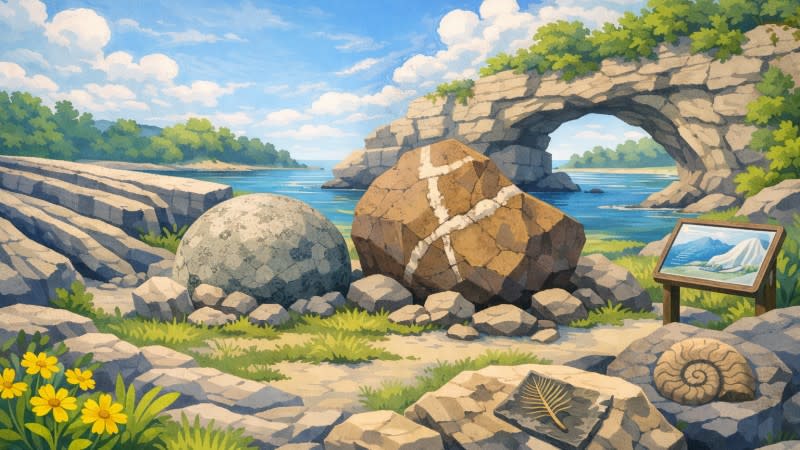
Geologists believe that the grooves were carved into the limestone bedrock by a slow-moving glacier during the Ice Age. The glacier picked up rocks and other debris as it moved, gouging the grooves into the softer limestone. As the ice crept over the soft limestone bedrock of Kelleys Island, these harder bits of rock gouged the grooves that we see today.
The grooves are also important to historians, scientists and students. They give us valuable information about the direction and movement of the glaciers that shaped our entire landscape.

What do glacial grooves help show visitors today?
A. How coral reefs grew
B. How ancient glaciers shaped the landscape
C. Where fish lay eggs
D. How caves are built
What is one way glaciers changed the landscape of the Great Lakes region?
A. They built skyscrapers
B. They carved land and helped shape valleys, shorelines, and lake basins
C. They made the sun brighter
D. They created deserts
Articles to learn more!