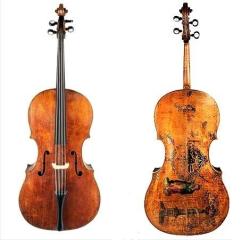
 If you’re like me, and many others I know, you may have, at one point, researched your family tree. But have you ever thought about the family trees of musical instruments? If you aren’t aware, musical instruments come in families - Brass, Percussion, Woodwind, and Strings. These instrument families have similarities in the ways they are played, and often their history and development as well. While all these instrument families have fascinating histories, for our purposes here we will focus on the String family, and in particular, the cello.
But what is in a name? The instrument commonly known as the cello is properly titled “Violoncello” which has the confusing translation of “big little violin.” But this is only the beginning of the complications, over the years the cello has been called MANY names including - Basso di braccio, Violone, Violone da braccio, violoncino, bassetto viola, violon de Chelle, petite basses de Italiens - and those are just the French and Italian terms!
Let’s start further back for a moment though, the cello (and other violin family instrument - violin, viola, and double bass). The medieval period has the most recognizable ancestors of the cello, called the Rebec and the Vielle. Both 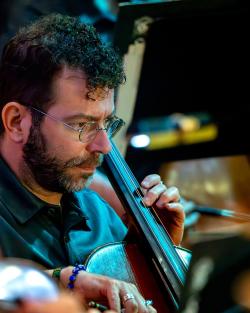 were bowed stringed instruments played either similarly to a modern violin or held on the knee. These instruments influenced both the Viols (NOT part of our modern violin family) and the modern violin family of instruments. As these instruments evolved, one can see shapes and string numbers changing and altering and by the 1500s the modern violin family was coming into shape!
The cello, in mostly its modern form, evolved by the mid 1500s in northern Italy. The early instruments were not as standardized and used unwound gut strings. The sound was not yet appropriate for solo work, but quickly became a bass line instrument. Throughout the next few centuries, the cellos' place in music ensembles altered from bass and accompaniment to eventually having solo lines. Perhaps the culmination of this period is the composition of The Six Cello Suites of J.S. Bach, which are still today considered a pinnacle of cello repertoire.
By the 1660s gut strings wound with silver or other metals began solidifying the sound of the cello and gave it even more power as a solo instrument. Heading through the 18th and 19th centuries, music began being performed in larger concert halls and instruments need to increase in volume. This led to changes in bow shape and the eventual adaptation of the end pin (for much of its history, the cello would be held up with one’s legs!). To learn more about 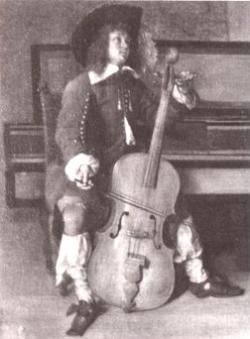 these developments, attend the Time Traveler History Talks: The Little-Big Violin: History of the Cello on March 31, 2026 at 5:30 pm at Shores & Islands Welcome Center-East, Sandusky.
Locally you can hear all the violin family of instruments, as well as the other families, perform together at the Firelands Symphony Orchestra! This group, which began as the Fine Arts Chamber Orchestra in 1983, has grown to become a full, professional orchestra performing a full season of concerts as well as free summer concerts!
Would you like to learn more about how women influenced the modern performance practices of the cello? Or would you like to hear some examples of this music from history? Come to the talk on March 31 to find out!